Showing posts with label soil fertility. Show all posts

Friday, July 20, 2007

July 18 Presentation at Bloomfield, Prince Edward County, Ontario

Peak Oil, Climate Change and Local Sustainability

Peak oil is the theory that we have or are about to have used up half the world’s endowment of oil and that what oil remains will be increasingly scarce and unavailable, steadily poorer quality, and increasingly more expensive. IT IS NOT a theory that we are about to run out of oil.


Global warming is the theory that man-made atmospheric pollution, mostly from the burning of fossil fuels, is causing the earth’s atmosphere to heat up to potentially dangerous levels.


Global Dimming is the theory that air born particulates, mostly from man-made pollution, are reducing the amount of the sun’s light and energy that are reaching the earth’s surface.


Overpopulation is the theory that total human population is exceeding the real carrying capacity of the planet.


I could speak for a whole hour on any one of those looming crises, but I won’t. My purpose here this evening is to try to encapsulate in a half hour or so how in this century the merger and interrelationship of those four crises, and a few other peripheral and related crises such as water, are going to affect;

* Food Security,
* Carrying capacity,
* Soil Fertility,
* Sustainability,

Both globally and, more important, locally here in Ontario and in Prince Edward and surrounding counties.

A few words about energy consumption;

* Global energy use per capita has risen more than 10 fold since the start of 20th century.
* One energy source has not replaced another, each is treated as an add on to the energy mix, resulting in layered energy options.
* Each of us uses the energy equivalent of over 300 slaves.
* Food on your table has traveled an average of over 2500 kilometers.
* The greater the energy use, the further removed we get from sustainability and self-sufficiency.
* This century we will hit not only peak oil but peak natural gas, peak coal, peak uranium, peak plutonium, as well as peaks in dozens of other finite resources; copper, gold, nickel, selenium, zinc, molybdenum, & more.

See my blog articles, Energy as the Catalyst in the Punctuated Equilibrium of Human Population Growth and Alternative Energy, Add-ons and Replacements

There is a not so old Saudi saying that prophetically encapsulates what we are facing in the near future with energy. It goes;

"My father rode a camel. I drive a car.
My son flies a jet-plane. His son will ride a camel."

The most critical and dangerous dependence on fossil fuels we have built is in food production and distribution. We use an average of 10 calories of energy, mostly from fossil fuels, to produce 1 calorie of food.

Despite the fact that we share it, albeit reluctantly, with millions of other species, the human population monopolizes over ¼ of the primary food production capacity of the planet. There is obviously considerable capacity still available to us, but only if we want to be alone. Our increasing monopoly of that primary productive capacity directly parallels the increase in human-caused species extinction. That doesn’t make us particularly evil. The dominant species in any environment always takes what it needs leaving weaker competition to fight for the scraps.

For the moment, then, let’s forget about those millions of other species. What exactly is the carrying capacity of the planet?

* Of the total global land mass, about 35% is arable land, 31% forested and 34% is either desert, tundra/permafrost or dedicated to other human uses such as urbanization or activity such as mining or recreation.
* Globally there are about 7.8 billion acres that are potentially arable of which 3.5 billion acres are now being used to produce food.
* The unused potential land is generally in areas lacking essential transport for moving product to market or infrastructure needed for the support of commercial food production.
* Of the 35% of the total global land mass that is arable or suitable for agriculture, about 2/3 is pasture or meadowland used for livestock.
* Another 10% (about 350 million acres) is used for grain and cereal production, much of that (75% or about 270 million acres) also used for livestock.
* Despite the global attraction of and growth in permaculture, only 1 percent of arable land is dedicated to permanent crops such as fruits and nuts.
* Essentially, all of human food production, excluding meat, dairy and sea food, is grown on less than 400 million acres. Each of those acres is, therefore, feeding about 15-17 people.
* If we were to bring all of the unused arable land into agricultural production with the same patterns as at present (85%+ for livestock support) we would net very little additional food-production land (about 600 million acres) to offset the anticipated drop in productivity of 80-90% on those current 400 million acres following peak oil. This would barely allow us to absorb the impact of a 25% drop in productivity.
* The unused potentially arable land is not in the same place as the 6.6 billion of us for whom it could reduce the impact of soil productivity loss following peak oil. It exists in pockets within the boundaries of already sovereign nations throughout the world, nations which themselves may be impoverished and unable to currently produce enough food for their own people.
* Probably, based on current patterns, these lands would more likely be used for high-profit crops like corn, soy and sugar cane to be used to produce bio-fuels in a world increasingly deficient in fossil fuel energy.
See my blog article, Post-Peak Agricultural Capacity

Global Water
We are very fortunate in Canada, exceptionally so in southern Ontario. Canada in general and southern Ontario in particular should be able to avoid the fresh water issues that will face much of the rest of the world this century and in the foreseeable future. The water rights issues that plague many drier areas such as Africa, South Asia and the western U.S. are and will be only an occasional problem in this area.

* Canada has the third highest volume of renewable fresh water in the world behind Brazil and Russia.
* Canada has more lake area than any other country in the world.
* The Great Lakes are the largest system of fresh, surface water on earth, containing roughly 18 percent of the world supply.
* Ninety-nine percent of surface freshwater by volume is in lakes and only one percent in rivers.

That is not to suggest that anyone should be complacent about water. Ultimately fresh water availability nets down to a resource issue for a single property, a single family, a single community. In essence, if you need it and you don’t have it or don’t have access to it, it is a serious problem for you.

* More than 2,200 major and minor water-related natural disasters occurred in the world between 1990 and 2001. Asia and Africa were the most affected continents, with floods accounting for half of these disasters.
* Of the dozens of water rights conflicts around the world I have read about and researched almost always agricultural water needs and water rights have lost out to the demands of urban areas and industry.
* Whenever the resolution of water rights conflicts is left in the hands of politicians and bureaucrats the resolution will be decided in favour of the highest voting density and financial contribution.
* The U.S. are moving inexorably toward solving the water needs of their agricultural and industrial heartland through the southward diversion of the waters of the Great Lakes. Considering the massive engineering project this would involve, peak oil could be a blessing in disguise.
Statistics from How much do we have?

Continued net decline in soil productive capacity

We are systematically destroying the overall fertility of our soil and losing productive soil.


* Our use of agricultural pesticides kills critical soil organisms,
* Intensive deforestation results in losing billions of tons of top soil,
* Annual U.S. topsoil loss is 7 billion tons (23 tons/year/person, 85% directly attributable to raising livestock),
* Intensive irrigation leaches vital mineral content out of topsoil,
* Air pollution results in toxic chemicals being absorbed into the soil,
* Industrial scale plowing and tilling results in billions of tons of top soil being dried up and blown away every year,
* We create an impermeable layer of hardpan just below the top layer of soil which prevents both plant roots and soil microorganisms reaching the mineral nutrients in the subsoil,
* Turning the soil exposes deep topsoil organisms and drives aerobic microorganisms deeper underground where they are killed for lack of air, water and heat from sunlight,
* We systematically destroy balance of soil nutrients through continued application of artificial NPK fertilizers,
* We change soil ph levels making it inhospitable for many soil organisms,
* We change symbiotic relationship of soil organisms and plants by replacing native plants with chemical-dependant monoculture.
* Soil erosion and other forms of land degradation now rob the world of 70-140,000 km2/year of farming land.
* Urbanization alone is responsible for the loss of 20-40,000km2/year.
* Worldwide, soil erosion has caused abandonment of 4.3 million km2 of arable land during the last four decades.
* The total world availability of topsoil is estimated at 7,000 gigatonnes - about seventy years of topsoil at current rates of destruction and loss.

State of global food production, consumption, distribution
* Before the Industrial Revolution the majority of people produced most of their own food, most of the rest acquired within a few miles of home.
* People then ate what could grow locally and ate what was in season or that they stored/preserved themselves. Now we eat tomatoes and celery in February, kiwi fruit and spring lamb from New Zealand, oranges from Israel, rice from the far east, beef from Argentina.
* The vast majority of people in the developed (and increasingly in the developing) world today who are growing food (now less than 2% of population) are not doing so for their own consumption.
* Agricultural produce today is fed into a heavily fossil-fuel dependant global food distribution system.
* Food today travels an average of 2500+ kilometers before reaching your table, takes a week, often much longer, to get there.
* Average food miles continue to grow with spread of urbanization and corporate-driven regional crop concentration.
* Food grown locally will be available in local food stores only by chance after having worked through the distribution system.
* Today more than ½ of global population live in cities, most with severe restrictions standing in the way of producing their own food.
* Most cities originated in and continue to expand into the very farmland they need to produce the food needed by their populations (urbanization responsible for loss of 20-40,000km2/year of arable land).
* The majority of people engaged in agriculture today are working land they do not own to produce product they do not, and cannot afford to, consume themselves.
* About 85% of “productive” agricultural land today is devoted to the support of livestock.
* The average diet today contains more meat and animal products in one day than our ancestors consumed in a week.
* Global emergency food grain reserves have shrunk in past ten years from marginal 119 day supply to a sub-critical 53 day supply.
* Ever increasing proportion of global food coming from GMO crops, an increasing use of terminator genes to ensure ongoing seed co. sales.
* Multinational corporations decide what is grown, how its grown, what is available in your local market (stocking decisions not made locally).

Understanding plant nutrition
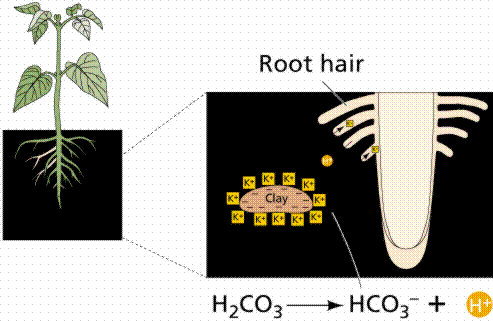
Plants receive their nutrients through and digest their food, like you, in their stomachs. The topsoil in which a plant grows is, in reality, its stomach. The stomach is an organism’s nutrient supply buffer between the outside world and the critical internal systems. Whole foods are broken down by bacteria and enzymes into pure form suitable for transport through those internal systems, like our blood stream, to the cells and organs which need those nutrients for metabolism and maintenance. Enzymes intercept toxins and eliminate them before they can enter those internal systems. A glut of nutrients is buffered and released slowly to those internal systems.

For a plant, all of these functions happen external to its critical internal systems. Bacteria and enzymes in the topsoil, especially that narrow band of topsoil immediately around the roots, the root zone, do this work. The roots themselves, to continue the parallel, are like the portal vein leading from the small intestine to the liver. It is the last part of the digestive system external to the organism’s sensitive internal systems. The root zone is like the small intestine, releasing the broken down essential nutrients to the roots (the portal vein) for absorption into the internal systems.

Just as the digestion in your stomach is under the control of your internal systems (principal digestive enzymes are generated in your pancreas and released into the stomach) the “digestion” for a plant in the soil is under the control of the plant in that the principal digestive enzymes are generated internally and released into the root zone.

See my blog articles, Plants with stomachs - Peak oil implications and Plant stomachs and animal stomachs: the differences and similarities

Topsoil as a living organism
Just like your skin is the largest organ of your body, the topsoil may be the largest living organism on the planet.

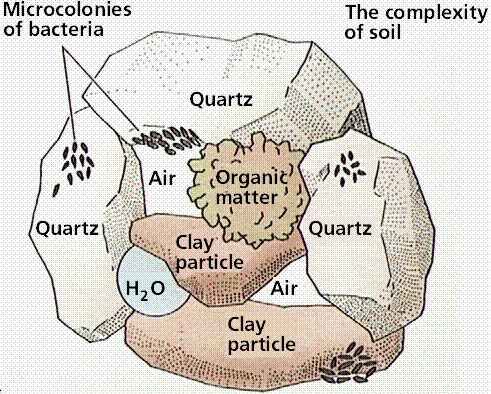
A single pound of soil contains tens of millions of bacteria, fungi and other soil microorganisms critical to the survival of all terrestrial life. Many of these microorganisms can trace their family tree (pardon the pun) all the way back to the very beginning of life on earth.

Nature wastes nothing. Those microorganisms are responsible for breaking down the raw resources in the soil and beginning the process of cycling it through the web of life, whether that resource be a fallen tree, a dead animal, a pile of elephant dung, a cow’s placental sack, or the minerals in a rock that has worked its way up from the subsoil.

We have, unfortunately, put a large portion of our planet’s topsoil on force-fed chemical life-support with our use of artificial fertilizers, pesticides, herbicides and other agrichemicals, like a brain-dead patient on intravenous life-support. We are destroying the natural fertility of the soil in the process. Just as it takes time to put a coma-recovery patient back on solid food (like weaning an infant off the bottle), it will take considerable time, possibly decades, to restore the natural fertility of soil that has been chemically maintained for decades.

When we remove life-support from the coma patient that patient generally dies relatively quickly. What will happen to our agricultural productivity when we pass peak oil and the agrichemicals begin to disappear? When we pull the plug on our soil’s artificial life-support?

Building/Maintaining Natural Soil Fertility
You’ve just picked a bunch of carrots. Consider what they are composed of;

* Water from the soil (maybe from rain or maybe irrigation),
* Hydrogen (in the carbohydrates) mostly from the water,
* Carbon, partly from CO2 but also from the soil,
* Other minerals like iron, sulfur, phosphorus, potassium from the soil,
* Fiber, collagen and vitamins like beta carotene produced by the plant from nutrients derived from the soil.

For most people the top of the plant ends up as “plant waste“. Before the carrot is eaten the root hairs and possibly the skin is pealed, more plant waste. The carrots are washed, the dirt flushed away. The carrot may be cooked, many nutrients lost into the cooking water which is discarded.

Generally none of this “wasted” plant material makes its way back to the soil in which the carrot was grown. The entire mass of that plant that was derived from the soil is a net loss for that soil.

We cannot continue to take organic material from the soil and replace it with a limited range of artificial nutrients (NPK) and expect that soil to remain viable. If we lose 100 billion tons of topsoil every year through erosion, how many billion tons or topsoil mass do we lose every year in food that we harvest from it? Artificial fertilizer use has grown 33-fold over the course of the Green Revolution in an unsuccessful attempt to maintain crop yields. And that usage will continue to grow, and still not maintain topsoil mass.

If we do not begin or resume returning to the soil what we take from it, we will continue to deplete the topsoil at a far greater rate than nature alone can replace it. Just as with any other resource, if we use it faster than it is being replaced it can eventually run out. We have broken the cycle. We must reconnect it.

As you drive around country roads take a look at the fields that have been in long term use for producing cash crops. Compare the depth of the soil in those fields to the depth of that surrounding those fields. The difference is mostly a combination of three things;

1) Soil compaction through the use of heavy farm equipment;
2) Soil loss from wind and water erosion;
3) Most important, continual loss of soil mass from crops being harvested and the “waste” organic matter not being returned to the soil.

I’m not sure if there are any examples around here but around cities like Toronto, when they build a subdivision, the first thing they do is strip all the top soil and pile it up in a big hill. From there it may be sold to a jobber to be “cleaned”, bagged and sold in garden centers.

When the homes are completed the top soil that was stripped (it may have been a foot deep) is replaced with grass sod that may have as much as a whole inch of soil held by the grass roots. Homeowners go to the garden center to buy bags of topsoil (it may have actually come from the land on which their house sits) to build their flower gardens.

On the other side of peak oil when the global food distribution system begins to break down, the chance of growing any significant amount of food on suburban plots is slim and none.

Soil fertility consists of a number of key factors; carbon, other trace minerals, organic content, humus, soil microorganisms, water.

Liebig’s Law of the Minimum says that growth is controlled not by the total resources available but by the scarcest resource. When a plant consists primarily of carbon and carbon-based molecules, how can we believe that fertilizing with Nitrogen, Phosphorus and Potassium is going to allow us to maintain yields and soil mass?

You restore and maintain natural soil fertility by building and continuing to nurture and replenish; carbon, other trace minerals, organic content, humus, and soil microorganisms.

Carbon
There is a soil type in the Amazon region of South America that has been receiving considerable scientific attention. It is called Terra Preta soil. It has been determined that this soil, as it is now constituted, is man-made. There are two keys to Terra Preta soil; 1) high carbon content, 2) a unique community of soil bacteria. The carbon in Terra Preta soil, it has been determined, originates from charcoal created as part of an ancient slash and char method of soil preparation. Terra Preta soil will net a yield of 300-800% that achievable in adjacent non-Terra Preta soil. Though it is thought that the unique soil bacteria is the more important component, black carbon soil supplementation alone has been proven to be very beneficial to soil and significantly improve yields, shorten required fallow times, improve soil water retention, reduce soil toxicity levels, and encourage growth of beneficial soil microorganism populations. Terra Preta soil, by the way, has also been found and proven to be self-renewing.
See the articles Terra Preta Soils - Agricultural Miracle from the Past? and Origins of Amazonia's Terra Preta Soils in my blog

Other trace minerals
The minerals in the soil largely originate from the base rock below the soil. That base rock is very slowly broken down by plant roots and soil microbes. In a natural system the minerals from the soil are constantly recycled by living organisms. In our unnatural agricultural systems minerals taken up by plants (they are used as critical co-factors in enzymes and hormones, in the formation of chlorophyll, in the structure of vitamins and more) is lost to the soil as those plants are removed in harvesting. Organic farmers often dust their fields with rock dust and other sources of trace minerals to replace minerals removed from the soil in harvesting. Bags of these materials can generally be purchased at garden centres and farm supply outlets.

Organic content and Soil Microorganisms
There are, of course, several traditional ways to return organic matter to the soil; using manure fertilizers, fallowing, planting and plowing under green manure crops, and composting. With the demands for maximum crop yields most of these practices have been abandoned in commercial farming operations. This is the most critical change that has to occur in revitalizing our soil fertility. Critically important is that all of these practices have a dramatic impact on the growth and health of the population of soil microbes. Organic content in the soil is also the most critical factor in the ability of the soil to maintain moisture, thus minimizing demands for irrigation.
See my blog article Soil fertility and carrying capacity

Post-peak Community versus homestead
The vast majority of people who become aware of the peak oil issue soon begin to consider the question of what type and size of community they want to be part of beyond peak oil, which communities will be the most sustainable, self-sufficient, self-reliant and survivable in the future.

The answer to that question is tremendously variable for a number of factors such as climate but most particularly depending on how far into the future one is thinking.

I cannot, in the time I have available, do justice to this issue. I would strongly suggest that you see a number of articles on my blog, Oil, Be Seeing You dealing with the issue;

* An argument against personal peak-oil preparation
* Homestead or community?
* Is there any alternative to powerdown? And the sooner the better?
* The right to pursue powerdown: seeking alternative lifestyles post-peak
* Relocalization and retail food chains


Essentially my belief is that it is critical to build strong, viable, self-sufficient and self-reliant community in preparation for the fast-approaching post-peak world. That community and its self-reliance critically includes all agricultural efforts in and around the community. The type of world in which our ancestors scratched self-reliant homesteads from the wilderness simply doesn’t exist anymore. The feeling for it may be strong in certain individuals but it has entered the world of myth.

Ideally post-peak community focuses on a bio-region. As I mentioned earlier, Prince Edward County is a very viable natural bio-region. The prospects of creating the self-reliance and self-sufficiency that will be the hallmark of successful post-peak communities is very strong here.

* There has been a strong build-up of a community of artisans and craft-persons with the type of skills that will be strong components of a post-fossil-fuel community.
* The county is effectively surrounded by water resources that should remain viable into the future.
* The Trent water system continues to deliver vital soil nutrients.
* The climate of the region is tempered by the water surrounding it.
* There is a strong agricultural tradition in the county, as well as a significant core of organic agriculture.
* The sizes of all communities in the county is conducive to building a regional network of self-reliant communities with a rational distribution of specialized skills and crafts.

The type of community that will be suited to the post-peak world, however, does not just happen. In our modern world the feeling and spirit of community, even here, has largely been lost. It will be critical to determine the skill sets that will be needed and ensure that those skills are built.

I could go on at length on this subject but it is important that you address this. The community has to be built from within. Local initiatives like the proposed establishment of a local farmer’s market, which I urge you to support, will be what makes the difference.

What you can/should do to prepare for the future
* Take care of whatever soil you have access to, maintaining soil fertility
* Ensuring access to clean water
* Understand sustainability and stewardship
* Forest management, plant trees, preferably hardwood, replace any harvested trees in kind
* Soil testing, classification, integration
* Root cellars, dehydrating, canning, smoking, drying, freezing
* Support local food production, 100 mile diet, 50 mile diet
* Heritage seeds, seed saving, surpluses
* Permaculture, three sisters, companion planting and other food production techniques
* Big and small islands - Bioregionalism and it's local applicability, relocalization
* Evaluate potential applicability of local currency
* Reduce consumption of animal products: meat and dairy especially; indoor food growing; public education and information exchange on sustainability within the community

Wednesday, June 27, 2007

Terra Preta Soils - Agricultural Miracle from the Past?

Sometimes we literally can't see the forest for the trees. In recent years there has been a great deal of scientific interest in a soil phenomenon in South America's Amazon River basin, a phenomenon called Terra Preta.

Scientists now understand, though they did not until recently, that Terra Preta soils are anthropogenic, created by man. They were, in fact, created hundreds, even thousands of years ago through the efforts of indigenous peoples living and thriving in the Amazon River basin. It was only recently, through efforts to re investigate myths from Spanish explorers about the fabulous golden cities of El Dorado that the forest behind the trees finally started to come into view.[3] It was through those efforts that the full extent of anthropogenic Terra Preta soils in this area were finally realized. It is estimated that as much as 10%, maybe more, of the soils in the Amazon basin are Terra Preta soils. Only after understanding these magnitudes did archaeologists finally understand how there had been a sufficient agricultural base to support the vast ancient civilizations (now estimated to possibly number into the millions of people) in the Amazon basin, civilizations that, until recently, had largely been written off as myth.

What is Terra Preta soil? Essentially, and it is a mistake to believe this gives a complete understanding of what makes Terra Preta work, Terra Preta is soil that has been enhanced by black carbon, derived from charcoal, and other organic matter. But there is more. A report entitled Isolating Unique Bacteria from Terra Preta Systems: Using Culturing and Molecular Tools for Characterizing Microbial Life in Terra Preta, states, "The greater fertility of Terra Preta (TP) soils is thought to be due to their high black carbon (BC) content, which contributes to increased nutrient and moisture retention, and increased pH. It is likely that the unique chemistry of BC results in distinct microbial communities involved in nutrient cycling and organic matter turnover.[my italics]"[1] With a number of extensive scientific investigations underway on Terra Preta soil, in fact, scientists are coming to realize that the similarities of the bacterial colonies in Terra Preta soils at different locations, even hundreds of miles apart, are far greater than similarities to the bacterial colonies in non Terra Preta soil in areas immediately adjacent to Terra Preta sites.[1, 2]

Here is where I launch into my own speculation. Throughout the history of man nomadic peoples have carried with them from site to site materials and items that are of critical value to them. The Polynesians as they hopped from Pacific island to Pacific island took with them the seeds, roots and seedlings of particular plants that were important to their culture. Early men, as yet not knowing how to create fire, took great pains to carry embers from one fire to start a fire at a new site.

It is not unreasonable to speculate, in fact, that the original pockets of Terra Preta soil were not made by man but rather discovered by man. Over time they may have realized that adding charcoal from their fires to the soil resulted in dramatic increases in fertility. They may have taken this knowledge to a new site and found, in fact, that it didn't net them the results they expected. It may have been, at that stage, that they returned to the site with the fertile Terra Preta soil, gathered up some of that soil and carried it with them to the new site where they mixed it, and more charcoal, into the soil at the new site. It is very unlikely that they would understand what made the original Terra Preta soil so fertile. It would probably have been a form of magic to them, and that Terra Preta soil that they carried from site to site would have been seen as magical in its own rite.

This hypothesis of mine (I'm not claiming it is original or unique but I have not seen similar speculation in other quarters) would clearly explain why the bacterial population in one Terra Preta site is so like that at other Terra Preta sites but unlike the bacterial population in non Terra Preta sites adjacent to Terra Preta sites. The bacteria in the Terra Preta soil did not originate in the soil that was transformed into Terra Preta soil but originated in a Terra Preta site elsewhere and was transported there by the indigenous people who established the new Terra Preta site. This would suggest that the development of the Terra Preta soils throughout the Amazon basin was spread over hundreds, even thousands of years as indigenous peoples criss-crossed the basin moving from one site to another, taking their magical Terra Preta soil with them to seed the soil at the next site.

Regardless of whether my speculation is correct concerning how the different pockets of Terra Preta soil were created, the important point is this. What makes Terra Preta soil work is not the black carbon from charcoal that has been added to the soil. It is the unique population of soil bacteria in that soil that utilizes and thrives on that high concentration of organic carbon. Terra Preta soil, like all soils, derives its fertility not from the mineral content of the soil but from the tens of millions of micro-organisms that live in that soil and make those minerals and other soil nutrients available to the plants growing in that soil.

My caution is this..... do not go out and add a bunch of charcoal or black carbon to your garden thinking it will give you Terra Preta soil with its wondrous fertility. You can, however, buy bags of Terra Preta soil at some better garden centres that can be added to your garden, along with charcoal or black carbon, that will give the desired results.

One more caution..... To my knowledge no scientific testing has yet been done to determine if the bacteria unique to Terra Preta soils can survive in non-tropical soils, most specifically in soils prone to a winter freeze. Until such testing has been completed I would be cautious about trying to duplicate Terra Preta soil in your garden in growing zones subject to winter freeze.


-------------------------------------------------------
1. Isolating Unique Bacteria from Terra Preta Systems: Using Culturing and Molecular Tools for Characterizing Microbial Life in Terra Preta - 16-Aug-2006
Authors: O'Neill, Brendan; Grossman, Julie; Tsai, S.M.; Gomes, Jose Elias; Garcia, Carlos Eduardo; Solomon, Dawit; Liang, Biqing; Lehmann, Johannes; Thies, Janice
2. Terra Preta
3. BBC - Horizon - The Secret of El Dorado (see particularly minutes 45-48)

Wednesday, November 22, 2006

Plant stomachs and animal stomachs: The differences and similarities


The greatest single issue in the whole gamut of peak oil issues is and will continue to be food security, global human society's ability to feed itself. This is inextricably linked to two other issues; 1) global human population and 2) soil fertility. Once we have passed peak oil and the users of that oil must compete for an ever-decreasing supply there are no guarantees, other than price and the market, as to who will get the supplies they need and who will be priced or simply pushed out of the market. If human population continues to grow at the same time and we continue to "invent" new ways of expanding our oil and other energy usage, the gap between that rising demand and that declining supply will continue to grow at a pace faster than the pace of oil decline.

In my opinion, the greatest single critical issue at that point will be food security and soil fertility. Since Doctor Norman Borlaug kicked off the euphemistically-titled Green Revolution a half century ago as a solution to the global malnutrition crisis, the human population has been living on an artificial soil fertility. This was created with and continues to be critically dependent on the use of artificial fertilizers derived from natural gas, petrochemical pesticides and herbicides, hybridized and genetically modified food crops, aquifer-depleting mechanical irrigation, and an energy-intensive and oil-dependent global food distribution system. When the fossil fuels on which this artificial soil fertility are dependent go into decline we are going to have to again rely on natural soil fertility to feed the 7-billion+ population that will then exist. We have, during this prolonged Green Revolution, been systematically destroying this planet's natural soil fertility. For more on this see the articles Plants With Stomachs: Peak Oil Implications (October 23), Presentation at October 11 Peak Oil forum in London ON (October 13), and Peak Oil is not about the oil (July 18) in this blog.

Let me try to put soil fertility in a context that most people will understand. How do living organisms on planet earth get the nutrients they require for building and maintaining body tissues and for the energy to drive muscles, nerves and other operational tissue? Put simply, how do plants and animals eat and digest food? They have stomachs, of course. The enzymes and bacteria and other micro-organisms in the stomach break down that whole food into the basic elements of nutrition [proteins (more specifically amino acids), vitamins, minerals, fats, starches, sugars]. They also perform the very important task of being the primary intercept for toxins so that they do not enter the internal operational systems of the organism. For this reason, and contrary to popular belief, the process of digestion takes place outside of those internal operational systems. The stomach (your stomach) where the digestion takes place is linked to but is not part of the internal metabolic and operational systems of the organism. Once the digestive enzymes and organisms have broken down the food in your stomach to basic nutritional elements, these elements are released to the intestine (still not part of your internal systems). Further, more specific digestion takes place in the intestines. Once that work is complete the wholly digested and primarily purified nutritional elements are released to the liver via the Hepatic Portal Vein. The final process of purification takes place in the liver and from there the purified basic nutritional elements are released and travel via the circulatory system (we are now in the internal systems) to those parts of the organism where they will be put to use. All of this movement of nutrients throughout the body is accomplished through the agency of tens of thousands of different enzymes.

Strange as it may seem, the same processes that take place in our stomachs (and the same protections to keep toxins from entering the internal systems) are also essential to all plants. But plants, of course, do not have stomachs. Or do they? Yes they do. For a plant its stomach is the top-soil in which it grows. The enzymes and bacteria and other micro-organisms that break down the whole foods in the soil and make it available to the plant as basic nutritional elements all exist in the soil, external to the internal operational and metabolic systems of the plant. A large proportion of these organisms cluster in the small zone of soil immediately around the plant's roots (the root zone). Many of these organisms (specifically enzymes) are generated by the plant itself and released into this root zone. Here they interact with other soil organisms and supply "digested" and purified nutrients to the roots of the plants. But the soil organisms are not contained only within the plant's root zone. They exist throughout the top soil.

Those soil organism responsible for breaking down soil nutrients into a bio-available form that plants can absorb, unlike the digestive organisms in the somewhat protected environment of your stomach, are exposed and vulnerable to the environment in, above and around the soil in which they function. Here they are vulnerable to all of the injustices that man inflicts on the soil. They are exposed and destroyed when we cultivate the soil. Most importantly, however, they are destroyed (overstimulated and burned out) by the artificial fertilizers we put on the soil to improve our artificial soil fertility and, critically, destroyed in large numbers by the petrochemical pesticides we use to destroy insects attacking our crops. Most of our long-use commercial agricultural soil is, for all practical purposes, dead. The crops grown on them primarily are critically dependent on those artificial fertilizers for their nutrition and survival. Take away those artificial nutrients and those soils will, until natural fertility is restored which will take decades, probably only produce 10% of the crops we currently produce on them.

This is where peak oil and peak fossil fuels becomes so critical. Once supplies of those fossil fuels (most specifically oil and natural gas) begin to decline and the feedstock go into decline for those artificial fertilizers derived from natural gas, and those pesticides, herbicides and other agrochemicals derived from oil, we will have at least a temporary (for several decades) global soil fertility crisis. Our global ability to produce the food necessary to support our massive human population (which has nearly tripled in the years since the beginning of the Green Revolution) will decline rapidly and critically.

Even if, as the latest cornucopian CERA report claims (with which I vehemently disagree), peak oil is thirty years away, we need to have already begun the long-term process of restoring natural global soil fertility and transitioning from artificial soil fertility back to natural soil fertility. We cannot feed the current global human population today. The global emergency grain reserves have declined over this past decade from a marginal 119 day supply to a sub-critical 57 day supply and continue to decline as the world population continues to consume more food than is being produced. As much as one quarter of the global population today is malnourished or undernourished. The FAO estimates that 40,000 people globally are dying every day from starvation and nutrition-related diseases.

We need to stop quibbling over the details of how much fossil fuel reserves we have left and when the date of peak oil will be and accept the reality that some time in the near term future we will pass peak and start on the downhill slope. To mitigate the impact of that event we need to have already begun preparing for the transition that will then have to take place. To wait until we can verify that we have passed peak oil condemns the global human population to have to deal with the worst implications of that event.

Monday, October 23, 2006

Plants With Stomachs - Peak Oil Implications


Feedback that got on a recent presentation of mine has, most unfortuntely, reminded me that the average person does not even a basic understanding of natural plant nutrition. Nor do they understand what soil fertility is, or what affects soil ferility. Most importantly, and this is where it is unfortunate, people generally do not understand the dire implications for our future global food security if we pass peak oil and head down the downslope of oil depletion without first taking strong remedial action to restore soil fertility, most particularly on those soils that have been used for commercial agriculture over this past half century.
How do plants get their nutrition and what nutrition do they need? I am guilty of having thought that was a simple question to which most people would instinctively know the answer. I was so very wrong.
Plants, of course, get their air from the same place we do.... from the atmosphere. But they, of course, do not breath air to get oxygen. They are after the carbon dioxide and after they are finished with they "exhale" oxygen, the direct opposite of ourselves. Does the destruction of the Amazon rain forest affect our global air quality? You bet your ass it does. Does it affect the build-up of greehouse gasses that is contributing so heavilly to global warming? Absolutely. Does it affect the nutritional quality of those plants we grow for food? Most people do not seem to realize that it does. The more carbon dioxide there is in the atmosphere the more plants will grow. To so many that is a good thing. The unfortunate reality is that the nutritional content by volume that results from that extra growth is going down steadilly. The other little understood reality is that, just as pure oxygen is toxic to our systems, the higher the concentrations of carbon dioxide in the atmosphere the more injurious it is to many plant species. They have, after all, evolved in an environment with a very tight range of CO2 concentration in the air they breath. When the concentration is outside those limits they can't cope with it any more than we can.
Plants, for the most part, get their water from the soil in which they grow. One of the key properties of naturally fertile soil is its ability to hold water which is then available to the plants growing in it. That water retention facility is a result of organic matter and humus in the soil. It is also a function of size of soil particles and the population of micro-organisms in the soil. Soil depleted of its organic matter and humus, soil where critical micro-organisms have been killed by pesticides and other petrochemicals, loses its ability to retain water. We compensate by irrigating those crops. This further exacerbates the problem by leaching critical nutrients, most particularly minerals, down into the sub-soil, and by building up toxic salts in the top soil that are injurious to both the micro-organisms in the soil but also to the plants grown in it. Those plants, for example, that extract nitrogen from the air and fix it in the soil are seriously affected by these toxic salts. The bacteria responsible for building the nodules on the roots of these plants wherein the nitrogen is held are very adversely affected and killed by the build-up of soil salts. No problem. We simply add nitrogenous fertilizer to the soil to make up for the inability of these soil organisms to fix nitrogen from the air. These heavy concentrations of inorganic nitrogen, however, simply make the problem worse over time because neither the soil organisms or the plants can cope with the overload.
Some of the most interesting feedback and discussion I received following my presentationwas about my point that, unlike ourselves and other animals, the mouth, stomach and digestive system of plants is not inside the plant but is, in fact, in the soil in which the plant grows. We eat whole foods which are broken down into discrete nutrients by the bacteria, enzymes, and other micro-organisms contained within our stomach and other parts of our digestive tract. Nutrients enter our bloodstream in pure form after being broken down. For plants all of that activity takes place in the soil. In healthy soil there are millions of these "digestive" micro-organisms for ever cubic inch of soil. A majority of them, in fact, live in a narrow zone surrounding the roots of the plants, and nowhere else. They break down and convert the organic and mineral nutrients in the soil into a form that the the plants can utilize. Pouring on chemical fertilizers is an extremely inefficient way of trying to feed plants. It still requires enzymes and bacteria in the soil to transform the nutrients into a bio-available form and make it available to the plant's roots. A great deal of the fertilizer introduced synthetically never gets taken up by plants. It either builds up to toxic levels in the soil or gets washed away into our rivers and lakes to pollute them. We continue to use more and more artificial fertilizer on commercial agricultural soil every year and yet our crop yields continue to decline. I have seen figures, and I can't validate them, that we are using 33 times as much fertilizer per acre today than just 35 years ago and yet are faced with crop yields of 20% less or worse.
The point in this rant is this. The green revolution championed by Doctor Norman Borlaug, which is based on the use of petrochemicals, irrigation, and high-yield hybridized anf GMO seeds, allowed us to head off a serious human calamity being brought about by overpopulation last century. Through the green revolution global food grain production more than doubled over this past half century. The problem is that the global population increased in the same time by an even greater percentage. Once we pass peak oil and agrcultural petrochemicals become, at first, increasingly expensive and then increaingly unavailable, the artificial fertilty that our use of petrochemicals has allowed will be lost and we will have to return to a dependence on natural soil fertility. The problem then is that the natural soil fertility on which we will then rely does not exist. We have destroyed it over this past half century. It will take at least two decades to restore that natural soil fertility no matter what method we use. With our artificial soil fertility gone and our natural soil fertility decades away, global food production capacity will fall to dramtically low levels. Naturally fertile soil, properly managed, can produce significantly higher polyculture crop yields than chemically dependent monoculture. The only problem is there is so little naturally fertile soil left on which to do it.

Tuesday, July 18, 2006

Peak Oil Is Not About The Oil

There is something that is very important for people to get theirheads around. Peak oil is not about the oil, not about gasoline anddiesel and heating oil and jet fuel. It's not about cars, SUVs,vans, trucks, busses, trains, planes or ships.Peak oil is about food and our progressive inability, after we passthe oil peak, to produce enough of it to feed our 6.5 billion globalpopulation. Even now, every day over 40,000 people worldwide die ofstarvation, malnutrition and nutrition related diseases. Each 1%gap between global demand and global supply will increase thosedeaths by 10-25%.Food production in today's world is critically dependent on oil (forpesticides, herbicides, agrichemicals, and agricultural, irrigationand distribution fuels) and natural gas (for artificial fertilizers)and clean water from ever scarcer and shrinking lakes and rivers andever shrinking underground aquifers.A shrinking global food supply is not just a problem for the thirdworld. Everybody has to eat and we in the developed world tend tolike to do that far more than those in the third world.Reversion to organic farming methods not dependent on artificialfertilizers and pesticides will not be as easy as the uninitiatedmay think. Our commercial agricultural land is essentially toxicand sterile through our use of petrochemicals and limited-nutrientartificial fertilizers. Commercial agriculture is essentially anexport business, exporting the nutrients from the soil on which wegrow the crops and never re-importing those nutrients. If theagrichemicals on which commercial agriculture relies were todisappear tomorrow, it is reliably estimated that those samecommercial soils will produce between 5-20% of the crops they dotoday, assuming even then that there is sufficient fresh water toirrigate them. It is estimated that it would take 10-20 years ormore to rebuild the natural fertility of thyose commercial soils.Without those agrichemicals that means a drop of 80-95% in theproductivity of those soils until their natural fertility isrestored.The other key factor, of course, is crop pests. Without oil-derivedpesticides crops will be susceptible to invasion by those pests innumbers possibly never seen before. We have, through our use ofpesticides, helped those pests evolve resistance. Commercialfarmers today use 33 times as much pesticides as just three decadesago and yet lose 25% more of their crop to pests than they didthen. We are already losing the battle against crop pests. Whenthe pesticides are gone we will lose the war. That same use ofpesticides have also prevented our crops from evolving their naturaldefences against pests. Our current crops generally have very lowsurvival potential without those pesticides. All of this, ofcourse, parallels our own weakened immune systems because of theover-use of antibiotics, vaccines and other modern medicines, all ofwhich take over the immune response rather than strengthen theimmune system.In closing, this is the important point. People will notreally "get it" about peak oil until they get their heads away fromworrying about transportation fuels and understand the implicationsfor food in our world of 6.5 billion people.

Friday, July 14, 2006

Soil Fertility and Carrying Capacity


Earth's life-supporting environment was created by the very life dependent upon it. It is a symbiotic relationship with both halves of that partnership critically dependent upon the other. Without earth's benign and supportive environment there would be no life. Had life never arisen the oxygen atmosphere upon which all animal life is dependent would not exist.
As we near the end of our fossil-fuel age, the heartbreaking truth we must endure is that our dream of reaching out to the stars is likely never to be realized. We evolved as an earthbound species and will be forever constrained to that reality. We desperately want to believe there are other planets teeming with life. The reality is that, despite an incessant search, the only planet in all the universe that we know contains life is our own earth.
Like so many others I desperately wish SETI would receive that elusive signal from other intelligent life. Perhaps that would convince us all of what we have in common, that we are one us in a universe of them. But there are so many more reasons that we will never receive that signal than reasons that we might. Regardless, the reality is that we will continue to be dependent upon this planet for our existence.
Our solar system is a closed system. Our earth is a semi-closed system, receiving input from only our sun as it, like all stars, slowly consumes itself. The resources this planet contained before life arose are finite. Most of the resources since created by earth's living processes are renewable, not infinite but perpetually recreated by living organisms. Most of those renewable resources are themselves created from earth's finite resources. Life constantly recycles those elements through one living organism after another.
Some of those organisms convert raw minerals and other elements into a form that they themselves and other organisms can utilize. They are made available to the roots of plants which make them available to animal species who eventually return them to the soil when they die. Then the microorganisms start the process all over again. Nature wastes nothing.
Life is still critically dependent on these organisms for extending and maintaining the carrying capacity of the planet. Every ounce of raw planetary resources converted by them to a bio-available form extends and maintains the amount of life this planet can support. In these first few billion years of terrestrial life the most readily available and easily obtained of these finite resources have continuously been drawn upon by earth's life forms.
All finite, non-renewable resources being consumed will eventually be used up. Consumption will generally be at it's maximum at the point where about half of that resource has been used. This is the peak, just like Hubbert's Peak which describes the point of maximum consumption of the world's crude oil supply. Oil, though created from living organisms, is a finite resource. It is renewable only in that the same processes that created the oil we now use can recreate it. But the timescales involved are so long, on the scale of millions of years, that in human terms we must consider oil finite.
The agent using a finite resource builds a dependence on it consistent with the rate at which that resource is being consumed. That dependence is at maximum when consumption is at maximum, when that resource has reached peak and is half used up. As that resource passes peak and its availability declines so too will the agent responsible for its consumption. That is not limited to finite resources. Dependence can also be built around a renewable resource. The number of Koala an area can support is dependent on the rate at which the Eucalyptus trees on which they feed reproduce. Pandas are dependent on the reproductive rate of bamboo. Cheetah's rely on the breeding rate of Thompson's Gazelles. Oil can be reproduced but the rate of regeneration is far exceeded by the rate at which we consume it.
We consume and destroy earth's resources at a rate far exceeding that of all other life forms on the planet. Our activities, unlike those of any other species, are systematically destroying the life-support capability of the planet. Vigorously carried on long enough we will destroy the planet's ability to support any life at all, ourselves included.
Earth's life-support system consists of various components and sub-systems like the water cycle and the carbon cycle. The one component, however, most critical to land-based life, the engine of their life-support system, is top soil, that thin layer of dark, organically rich soil in which plants spread out their roots and upon which animals walk, urinate, defecate, give birth and die. It is in this thin, vital layer of soil that microorganisms convert raw resources and make them available to the myriad forms of life around and above them.
The human body contains trace amounts of almost every mineral on earth; carbon, calcium, sulfur, phosphorus, potassium, gold, silver, zinc, copper, iron, aluminium, molybdenum, chromium, platinum, boron, silicon and more. These are derived from the soil through our food. The amino acids that our body's proteins are made from contain only carbon, hydrogen, oxygen, nitrogen and sulfur. Our bones are constructed mostly of calcium, silicon, and boron. What are all of those other minerals used for?
All living organisms are vitally dependent on two particular types of proteins that control metabolism, conversion of food to cellular material, functioning of the nervous system, cell regeneration and more. Hormones are the body's internal messaging system. They control, for example, your body's rate of cell reproduction that controls your growth, your nervous reactions, cell division, immune responses and the contraction of muscles. Enzymes are responsible for the conversion of material from one form to another, the physical construction, maintenance and division of cells, the conversion of glucose to energy, and much, much more. There are literally tens of thousands of different types of enzymes responsible for virtually everything that happens in your body.
Enzymes and hormones are built to exacting specifications contained in your DNA. An enzyme may be responsible for combining together a carbon atom and an oxygen atom or splitting apart two joined sulfur atoms united by a disulfide bond. Each does only one very specific function. Most enzymes require a catalyst that acts as an agent in speeding up a chemical reaction (getting the carbon atom and oxygen atom to link or getting the two sulfur atoms to separate). These reactions would otherwise take place at such a slow rate that life could not function. Movement would not be possible. Your body would be unable to build replacements for your damaged or worn out cells. Food could never be transformed into useable material in your body or converted to energy to drive your muscles and nervous system. Enzymes quite literally are the key to life.
You may be aware of the handful of your body's digestive enzymes. But most of the tens of thousands of enzymes in your body are contained within your cells. They are generated there, do their function there, are broken down and recycled there, never exiting the cell in which they are created. Your food may be acted upon by hundreds, even thousands of different enzymes (like workers on an assembly line) from the time it enters your mouth until it is used in various bodily processes or built into a cell.
The key to the enzyme's ability to do it's job, like the assembly line worker, is the tools it has to work with, the catalysts. That catalyst may be a particular vitamin, an atom of oxygen, or more likely an atom of a particular mineral like iron, gold or silver. The minerals in your body not used in the structure of your bones, cells, nerves and muscles are used by hormones or by enzymes as catalysts in completing the chemical reaction they are responsible for. Without it's required catalyst, like the assembly line worker without his tools, the enzyme cannot do its job. If one enzyme in a series of reactions doesn't work the whole series of events shuts down. The enzymes after that can't get their materials. If the body, for example, does not have functioning amylase enzymes which break down starches, all of the bodily functions dependent on the nutrients in starches will not be able to function because their materials are, in a sense, held up at the receiving dock.
It is through our food that we get all of the minerals and other substances that our enzymes and hormones need as building materials and, most importantly, as tools to do their work. The body may still be able to generate the enzymes from instructions contained in the DNA but without their catalysts they are as productively useless as the workers sitting in the cafeteria.
Plants get those minerals from the soil through the help of an army of microorganisms that convert them into a form, very often an oxide, that the plant can use and making them available to the roots of the plant. We are systematically destroying the microorganisms upon which all life is dependent and the overall fertility of our soil. We are doing so;
through our use of agricultural pesticides which kill soil organisms as well as the insects and other pests that we intend to destroy,
through intensive deforestation resulting in millions of tons of critical top soil (and the microorganisms and minerals in that soil) being eroded away,
by exposing forest soil microorganisms that break down dead and fallen material on the forest floor to construct new soil,
through intensive irrigation which leaches vital mineral content of the soil down to levels where it is no longer accessible,
with air pollution which results in toxic chemicals being absorbed into the soil where it kills those microorganisms,
with industrial scale plowing and tilling of the soil resulting in millions of tons of top soil being dried up and blown away every year,
by creating an impermeable layer of hardpan just below the top layer of soil which prevents both plant roots and soil microorganisms reaching the mineral nutrients in the subsoil,
in turning over the soil with the plow which brings deep topsoil organisms to the surface where they are killed by exposure and driving aerobic microorganisms from the top layer of soil deeper underground where they are killed for lack of air, water and heat from sunlight,
with our systematic destruction of the balance of soil nutrients through continued application of artificial fertilizers containing only nitrogen, potassium and phosphorus,
by systematically changing soil ph levels which makes it an inhospitable environment for many of these critical soil organisms,
by systematically changing the symbiotic relationships of soil organisms and plants by destroying the native variety of plants and replacing it with massive tracts of monoculture.
Clearly we cannot continue the destruction of this life-support capability upon which we and all other terrestrial life depend. We must begin making drastic changes now, before it is too late. Sooner or later we will push that system to a tipping point beyond which recovery is not possible. We do not know where or when that tipping point will be. We can only hope that we have not already passed it but we must still proceed with the assumption we have not.
The focus of our effort must be food security. The most critical aspect of our ability to feed our massive population is soil fertility. We must ensure that the balance of the mineral and other elemental content of our soils is rebuilt and maintained and that the soils are repopulated and maintained with the critical microorganisms that convert those elements and make them available to the other living organisms, including ourselves.
We cannot use those processes that allow us to feed over six billion people but destroy earth's life-support capability and at the same time help the planet regain it's optimum carrying capacity. The two are mutually exclusive. The longer we use those destructive processes the greater the risk we will push the life-support system beyond the tipping point leading to its eventual and inevitable collapse. If we pass that tipping point the worst-case scenarios of population collapse become increasingly probable. The global population will inevitably contract, with or without peak oil, with or without global warming or any of the other global crises looming on the horizon. When and how badly depends upon how soon and how seriously we begin to rectify the problems we have created and move toward a sustainable modality of interfacing with this planet's natural systems.