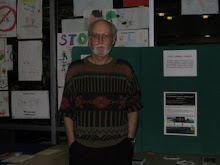
We are arriving at peak oil at a time when the largest generation yet in human history is entering statistical old age. Even more important, in most major western nations, it is a generation in which the majority of people have spent their working lives in various service industries, making their living through the neuron-firings of their brains rather than the sweat on their brows. Most have never turned a shovel, plowed a field, dug up a garden, grown their own food, canned, dehydrated or otherwise preserved their own food, harnessed a horse or helped a cow through the difficult birth of a new calf.
I am unusual in many respects. Firstly I was technically born before the arbitrarily-designated beginning of the generally-recognized Baby Boomer generation. It is generally accepted that that generation covers the period 1946-1964. I was born three months earlier in September 1945. I entered the computer software industry, one of those clearly service-oriented professions, in 1963-64 (long before the advent of the PC, computer monitors, GUIs and the internet) and spent thirty-five years in that industry. But unlike most in that industry I have done all of those self-sufficiency things I listed in the opening paragraph and even more, things such as working on farms during my late teens and even earlier if you count helping out on my uncle's farm as often as I could and working side by side with my mother and step father in our half-acre vegetable garden.
Despite my familiarity and comfort with skills that would be important in a post-peak world where self-sufficiency will be critical, I do not realistically expect to be able to achieve, let alone maintain, self-sufficiency in the coming years. In fact I do not expect to be a post-peak survivor. Nor do I at all expect the vast majority of the Baby Boomer generation to be long-term, post-peak survivors. It is one of those things that makes me wish that my non-belief in the afterlife turns out to be wrong so that I could watch from afar as peak oil unfolds...... just to see what happens.
In addition to the massive size of the Baby Boomer generation we are essentially a generation that have lived our lives with a totally unrealistic sense of entitlement. We feel that the lifestyle of relative wealth - relative to the rest of the world - and relative ease in which we were raised and have since lived and made our own way, is a God-given right. We have no sense of history, of the reality that we are the first and probably only generation that has lived in a long enough period of relative peace and economic expansion to have developed that myopic sense of entitlement. But it is the historical exception, not the norm. And the reality of history is very soon going to bite us in the ass and disconnect us from the matrix.
The other unrealistic view that we have developed in this past century is the assumption of a long and healthy life. Peak oil, I believe, will also mean peak life expectancy. Many seem to be unaware of or oblivious to the fact that the average life expectancy in industrialised nations has nearly doubled since the beginning of the Industrial Revolution. The greater the energy use per person the longer the average life.
That co relation is very definitely not accidental. That increased energy use has been the engine of innovation in human hygiene, human nutrition, human work and, most importantly, human medicine. Two keys to that statistical rise in life expectancy are; a major reduction in infant mortality especially in the areas of premature births and births of children with genetic diseases; and the dramatic improvements in medical care for the aged. Essentially if you can live into your sixties modern medicine can and will be used to keep you around for another couple of decades or longer. A very large proportion of seniors today have become seriously medically dependent, owing their continued survival to the wonders of modern medicine.
Both of these areas will face serious hurdles when we pass peak oil and the energy to continue the medical miracles of the past century - to which we have become accustomed and to which we feel entitled - goes into serious decline. Infant mortality will again be on the increase as access to medical facilities for difficult births declines. The increasingly difficult life that will accompany the decline of global oil availability will also exact a tremendous price on the aging baby-boomer generation and future generations of seniors. The heroic medicine that has been responsible for up to a 10-15 year increase in average life expectancy will be increasingly difficult to maintain as the world's energy resources decline.
I don't want to engage in a debate about creationism or intelligent design nor is this statement intended as an endorsement of either of those two points of view. Our bodies genetically evolved during millions of years where the average life expectancy was under forty years. Nature, for any species, does not expend a lot of resources on maintaining an organism beyond reproductive age. Man is the only living species on this planet that enjoys a lifespan that lasts twice as long as our reproductive period. That longevity is not of nature's doing. It has been of our own making, and it has been strongly linked to our use and expenditure of energy. Just as we have used energy - especially that from oil - to create an artificial carrying capacity 5-10 times greater than the earth's natural carrying capacity, we have used that energy to create an artificial life expectancy more than double the natural life expectancy for our species.
As the energy declines the age to which seniors live in industrialized nations will also go into decline. The artificial life expectancy created by our energy and technology will gradually be replace again by the natural life expectancy for which our bodies have genetically evolved. It is reasonable to assume that the first casualties in this transition will be those whose continued survival has been a result of the most recent and dramatic changes, improvements and innovations that our use of energy and technology have given rise to in this past century. The more medically and technologically dependent among us - which covers a high proportion of the senior population - will be the first to face serious problems as energy declines.
On a personal note..... I have been through two serious medical events in the past year, related to my heart, my circulatory system and my endocine system. The tests alone that I have endured would, if I were paying - I am Canadian and we have a universal health care system - would have added up to hundreds of thousands of dollars. The medicines that I have been prescribed and to which I owe my continued survival would, without that universal heath care and a good private medical plan, cost hundreds of dollars every month.
I am one of those medically-dependent people that will not fare well during a decline in global energy supplies. I have long accepted that. I continue to write what I write for the benefit of others. I want you to think about the ways in which your life and your survival, now and in the near-term future, are dependent on energy and technology. I want you to think about what you are going to have to do to ensure your longevity when the technology that our heavy of use of energy has allowed begins to disappear. I want you to consider what changes you are going to have to make as you become increasingly responsible for your own continued survival as the "system" that has taken care of you begins to fall apart.
Showing posts with label medical dependence. Show all posts
Showing posts with label medical dependence. Show all posts
Thursday, May 15, 2008


Friday, December 29, 2006
Of leeches & midwives?


What will be the implications for medicine and health care following peak oil as we slide down the oil and energy downslope into a low-tech/no-tech world?
The leap forward in health care and medicine in Europe and North America as we moved into the then high-tech world of the industrial revolution and the Victorian era was earth-shaking. Medicine came of age, became a science and a profession and an industry driven by methodical research and development aided by amazing new advances

in chemistry, diagnostic procedures and instrument technology. It was still, by our modern standards, crude and seemingly barbaric in many ways. But those new developments opened the door to the modern high-tech medicine that has become such a vital driver to the improvements in general health we enjoy today.

The impact in the last fifty years that modern medicine has had on saving and extending lives has been little short of miraculous. The incidence of infant deaths in this country has dropped from twenty-six per thousand live births as recently as 1960 to under five today. The average life expectancy has climbed from sixty-eight to over eighty-one years in the same time. Procedures such as bypass surgery and organ transplants have saved countless thousands of lives over the past few decades. New medicines and gene therapies have given us life-extension control of many formerly terminal conditions. In these past fifty years decreased infant deaths, improved medical survival rates and increased life expectancy rates have helped the human population triple to over six and a half billion people. And all of this has been achieved in the developed nations with a piddling 278,000% increase in the cost of providing health care since the end of WWII. That is two-hundred-seventy-eight-thousand percent.
Data released by the Canadian province of British Columbia show that in 1947 the province expended 1.2% of its annual budget on providing health care at a cost of $4.6-million. Fifty- eight years later in 2005 providing health care services was consuming 35% of the province's annual budget for a total outlay of over $12-billion. (http://www2.news.gov.bc.ca/news_releases_2005-2009/2006OTP0140-001167-Attachment3.htm). Even with a tripling of the province's population that is nearly a 1000-fold increase in the cost of health care services per person. Health care budgets have mushroomed by 400-1000% every ten years over this interval.
And yet there seems to be no end in sight, no suggestion of cutting back or slowing down. There are always new diseases to conquer, new disabilities to overcome, new medical conditions to bring under control, new surgical procedures developed around emerging technology, new surgical justifications based on newer and better diagnostic capabilities. A recent medical technology article suggested that if we totally eradicated arthritis, which the article suggested was possible, we could add another 35 years to the average life expectancy. That's a little over four months. But at what cost? And to what benefit?
(http://www.phac-aspc.gc.ca/publicat/ac/ac_5e.html).

The dozen or so most developed countries in North America and Western Europe expend more directly and indirectly each year on health care and medicine than the combined GDP of the fifty poorest nations on the planet. Clearly these expenditures do not benefit all peoples equally, and seemingly never will. While the average life expectancy in these wealthy nations is increasing by about 1 year every five years the life expectancy in the poorest third world nations is steadily declining. The medical technology of which we are so proud and on which we are so dependent has not yet become the medicine of the people. It remains the medicine of the wealthy.
But how much of our general improvements in health are due to these miracles of medicine? It is widely acknowledged and proclaimed that the greatest impact to human health and longevity since the Victorian era has been in the areas of hygiene and nutrition. This would seem to be born out by the wide disparity between rich and poor nations in life expectancy and infant mortality rates. This pattern is also borne out in the wealthy developed nations with the disparities in infant mortality and life expectancy between the poorest and richest in our own society. This, of course, begs the question that if our improved longevity has been so critically dependent on hygiene and nutrition why have health care budgets exploded by over 250,000 percent in the past fifty-eight years with only very marginal improvements (and in many cases declines) in general health?
One of the clear though debatable answers is that our affluent lifestyle is killing us, offsetting some of the gains that would have been made by those grotesque budget increases. Obesity, and especially childhood obesity, and the health risks associated with it has reached epidemic proportions. Health problems associated with chemical toxicity, such as the alarming increase in childhood asthma, childhood diabetes, childhood arthritis, and more, are increasingly a major contributor to our skyrocketing rises in health care costs. The costs continue to rise for treating diseases and medical conditions due to smoking, drugs and alcohol and other substance abuse. And the preponderance of our health care efforts and costs continue to be directed toward cures rather than focusing on or even encouraging prevention and mitigation.
What has all of this to do with peak oil? Simply this. As we pass peak oil and peak energy all of that medical technology will at first get increasingly more expensive and then start to go away, become increasingly unavailable. The health care disparity between rich and poor nations and rich and poor people will begin to narrow until, eventually, there will be no gap at all. Our modern medicine is critically dependent on high technology and that technology is critically and still increasingly dependent on the high consumption of energy from research to application. The energy on which it depends is becoming increasingly expensive and soon will become increasingly unreliable and increasingly unavailable. We saw in New Orleans after Hurricane Katrina hit how useless that technology becomes when the energy supply goes away. We saw how poorly trained and hard pressed the medical practitioners were to adapt to the reality of having to practice medicine without the support of that energy hungry technology. If we look at the state of health care in poor third world nations today, and if we remember the realities of New Orleans in the wake of Katrina, we get a glimpse of the level of health care we will over time be sliding toward on the energy downslope. When the grid goes away emergency generators kick in. When the emergency generators go away reality kicks in.

The impact on medicine of the approaching decline in oil, other fossil fuels and other sources of energy goes far beyond the visible and obvious things like MRI machines, CAT scans, X-ray equipment and laser surgery equipment. It will affect the cost and availability of energy to separate air into its component parts like medical grade oxygen, the availability and production of the plastics and the high purity metals from which medical implements are manufactured, the equipment for screening blood supplies, the ubiquitous electronic equipment that monitors patients' vital signs, the air ambulances that shorten that critical time to get seriously injured and ill patients to treatment facilities, the high tech ambulances that are never more than a few minutes away, the home treatment and support equipment that allows patients to get the treatment they need in the home environment, the anaesthetics, the antibiotics and sterilization products that are so critical to disease management in hospitals, the EKGs and other equipment in your family doctor's office. All of these things and so much more are critically dependent on that steady, reliable flow of energy that we have come to take so much for granted in our modern world.
The impact on all of these things won't have the immediacy of flipping off a switch. We won't suddenly wake up one day and find ourselves in the hands of witch-doctors treating our medical problems with leeches, potions and incantations. We won't suddenly have to call on a midwife when the baby is due, though an increasing number of women are choosing that approach today. Society will, for some time, continue to try to absorb the escalating costs of health and medical care. In peak oil discussions, however, it has long been suggested that among the first casualties

on the other side of peak oil will be those who are medically dependent, those dependent on medical technology and on high-tech medications. When escalating cost is replaced with increasing scarcity, however, when dependability gives way to an increasing decline in reliability and availability, the impact will begin to be felt across the totality of our society. At some point even the rich will no longer be able to get the best health care because money will not be able to get what is no longer available at any price.
We are beginning to see the leading edge of these problems even today. It is getting beyond just the horrendous escalation in cost. Wait times are increasing for surgery, much of it critical, and even for getting an appointment to see the family doctor. An increasing number of smaller communities no longer have resident

doctors, patients having to travel ever-increasing distances to doctors in other communities, many relying on the services of circuit doctors who visit their community at ever-widening intervals as these doctors must serve an ever-growing number of communities. Medical and surgical electives are no longer as readily offered or approved as they were even ten years ago. Doctors and nurses are increasingly having to work longer hours, see and deal with more patients, and more and more mistakes are happening as a result. The cost of medical malpractice insurance is skyrocketing beyond the reach of many doctors. The shortage of doctors continues to grow as older doctors retire and fewer and fewer young people choose to pursue medical careers in the face of the workloads and the cost of malpractice insurance and lawsuits. This is all indicative of a situation that will deteriorate ever more rapidly over the coming decades.

Consistently in election after election when polls are taken health care is at or near the top of people's lists of concerns. We no longer view good health as an aberration but rather as a right. If we are to continue to enjoy good health into and beyond the energy decline we are going to have to refocus on those areas of prevention that were so key to health improvements in the Victorian era, hygiene and nutrition. An ounce of prevention, says the old saying, is worth a pound of cure. When that pound of cure is no longer available that ounce of prevention may be the only road to good health still open to us.
Subscribe to:
Posts (Atom)